Powered by Blogger.
RSS

Service Dog Tips


How to Behave Around a Service Dog

Service dogs are all around us and this is truly a wonderful thing. They can help people to open and close doors, retrieve dropped items from the floor, walk across the street, and retrieve medication from a refrigerator, as well as a variety of other tasks. Each dog is tailor trained to meet the specific needs of their handler. And yet many of us still do not know how to properly interact with these fascinatingly furry helpers. Here are six etiquette tips to remember the next time you encounter a service dog.


Speaking to the Service Dog Team

That's right, the service dog and its handler are a team. And should you want to approach a service dog team, please speak to the person first. Speaking, touching, or making rude noises to the dog may only confuse him or her.

Petting the Service Dog

It may be tempting to pet or touch the service dog, but only do so after receiving permission from the dog's handler. Moreover, don't be insulted if your request is denied. Releasing the dog in order to greet you may distract his or her attentiveness to the handler.

Feeding the Service Dog

Do not offer a service dog food or dog treats. Even though service dogs are trained to ignore food on the ground and not beg for treats, your offerings may serve as a distraction for the dog. Besides, you can't be sure that the dog food or treat you are offering will not inadvertently cause the dog to become sick.

Interactions with Your Dog

If you have a dog with you, do not let him or her approach the service dog without first consulting with the handler. This can distract the service dog and, despite his or her training, may lead to an unwanted altercation between the animals.

Asking Personal Questions

Asking the handler about his or her disability is impolite and an intrusion of privacy. You should also never assume an animal is not a service dog if he or she does not wear a vest, patch, or any other item that would identify the dog as a service dog. This is not required by U.S. federal law.

Providing Help to the Service Dog Team

If you think a service dog team needs help, ask before acting. Grabbing the service dog's leash or harness from the handler without permission may cause the dog  — and the handler — to become confused or upset. Also, do not take it personally if the service dog handler rejects your offer of help. It's for a good reason.


  • Digg
  • Del.icio.us
  • StumbleUpon
  • Reddit
  • RSS

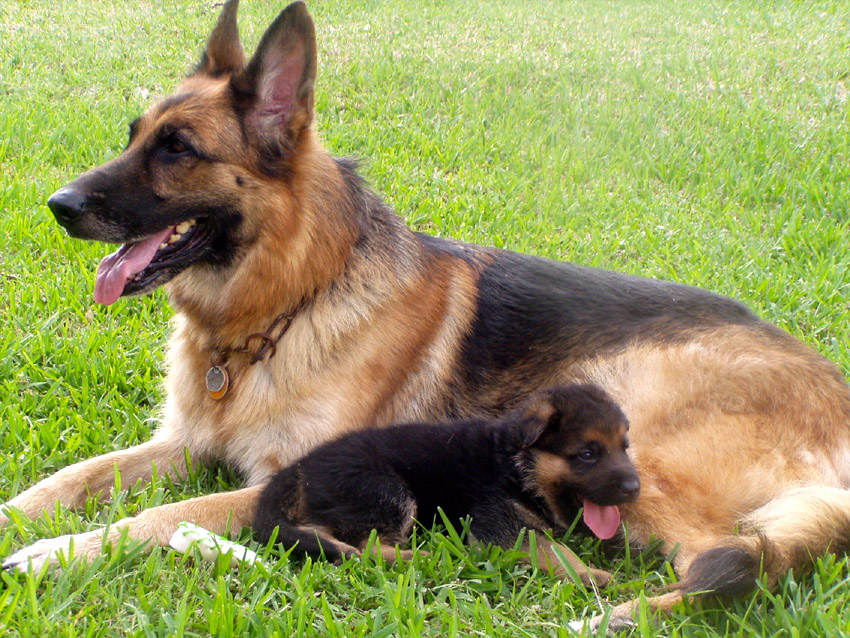
Breeds: German Shepherds!!

The German Shepherd Dog is a natural protector and so adaptable and intelligent that he has performed just about every job known to dog. If he had opposable thumbs, he would be unstoppable. Rin Tin Tin, a pup found in a World War I battle zone, became the world’s first canine movie star, forever marking the German Shepherd Dog as one of the most easily recognized breeds. From his imposing size to his erect ears and dark, intelligent eyes, he has achieved legendary status as the ideal canine. A versatile, athletic and fearless working dog, the Shepherd has done just about every job a dog can do, from leading the blind and detecting illicit drugs to bringing down fleeing criminals and serving in the armed forces. An energetic, loyal and devoted companion, the German Shepherd isn’t a breed but a lifestyle.


The abilities of this breed go far beyond its origin as a herding dog. The German Shepherd has made a name for himself as a police and military dog, guide and assistance dog, search and rescue dog, and detector dog. He has excelled in every canine sport, including agility, obedience, rally, tracking and, of course, herding. German Shepherds still work livestock on farms and ranches around the world, including the United States. If you have horses, they will trot alongside you while you ride and help you put the horses back in the barn when you’re done.
It takes some dedication to live with a German Shepherd.  Be prepared to provide plenty of exercise and mental stimulation. A half-hour walk twice a day, plus a vigorous play or training session, is a good start.
The protective but loving German Shepherd is a great choice for families with children, but singles and couples who love the outdoors also match up well with this breed. With sufficient exercise and opportunities to use their considerable athleticism and brains, these versatile companions can handle anything from a small city apartment to a vast ranch. They're not suited for life in the backyard or a doghouse, but need to live indoors as a member of the family.


Other Quick Facts

  • The German Shepherd is highly intelligent and will not be content to live life as a couch potato. He’s a dog of action, and he needs to live with an active person who will give him a job worthy of his talents.
  • German Shepherds love children and make great family dogs when they are given early socialization and training.
  • Most of us think of the German Shepherd as a black and tan dog, but they can also be sable and solid black. Dogs with white, blue or liver-colored coats are frowned upon by breeders, so don’t fall for marketing claims that those colors are “rare” and command a higher price.
  • A German Shepherd should never be shy, nervous or aggressive.


All information in this blog is from VetStreet

  • Digg
  • Del.icio.us
  • StumbleUpon
  • Reddit
  • RSS

Ticks!


What Are Ticks?
Ticks are small, eight-legged parasites that must drink blood in order to survive and reproduce. Ticks don’t fly, and they can’t jump (unlike fleas). In fact, ticks are more closely related to spiders and mites than to “insects” like fleas. Of the hundreds of tick species, approximately 80 are found in the United States. Ticks can feed on a variety of hosts including birds, dogs, cats, and people.


Why Are Ticks a Problem?
If a dog is heavily infested with ticks, the parasites can drink enough blood to cause anemia (severe blood loss). However, ticks are mostly a concern because of the diseases they can transmit to their hosts. Lyme disease and Rocky Mountain spotted fever are among the dangerous diseases that ticks can transmit to your dog. Although people can’t catch these diseases from dogs directly, infected ticks can bite people and transmit them. If your dog is exposed to these dangers, chances are that you and your family may also be at risk for exposure.

How Do Dogs Get Ticks?
Despite a very popular myth, ticks don’t fall or jump out of trees onto a host. However, ticks can climb, and they tend to attach themselves to shrubs and blades of tall grass. They can also live in dens of rodents and other small mammals. One species of tick can even live indoors.

When a host walks by and brushes against the grass or shrub where the tick is waiting, the tick climbs onto the host. Once on a new host, the tick eventually finds a location to attach and feed. For some diseases, like Lyme disease, a tick must be attached for several hours in order to transmit the infection to a host. This means that if you check your dog (and yourself) daily, you have a chance of finding and removing any ticks before they can transmit Lyme disease.


How Can I Protect My Dog From Ticks?
Keeping your dog out of wooded areas, tall grass, and other tick habitats is a good way to reduce the risk of exposure. However, this can be difficult for many pet owners, especially if they share an active outdoor lifestyle with their dog.

Effective tick control products can be used on dogs to help protect them from ticks. There are many options, including spot-on liquid products and collars (see our post here). Your veterinarian can recommend a safe and effective product for your dog.

Remember that ticks are successful parasites that can be difficult to kill. Even if you are using an effective tick control product, you should still check your dog daily for ticks and remove any as soon as you find them. You should never remove a tick with your fingers. Tweezers work well, but be sure to grasp the tick close to the head and pull gently to avoid leaving the mouthparts imbedded in the skin. There are also tick removal tools that are very easy to use. Avoid using lighter fluid, matches, or other products that may irritate the skin or cause other injuries to your dog. When in doubt, ask your veterinary care team for assistance removing the tick.

Why Are Ticks a Problem for Cats?
It may be tempting to dismiss the importance of ticks on cats, because cats are less likely to be diagnosed with Lyme disease and some of the other diseases that ticks transmit to people and dogs. However, there are still reasons to be concerned about your cat coming into contact with ticks. 
If a cat is heavily infested with ticks, the parasites can drink enough blood to cause anemia (severe blood loss). 

Additionally, if your cat brings ticks into the house, your family members could be exposed to Lyme disease and other diseases that ticks can transmit if they bite people. Ticks can transmit a disease called cytauxzoonosis (pronounced sight-oh-zo-uh-nosis) to cats.


This disease causes serious illness and even death in infected cats. Cytauxzoonosis is actually caused by two parasites. The first parasite, an infected tick, bites a cat and transmits the second parasite, a single-celled parasite called Cytauxzoon felis, to the cat. Once infected with Cytauxzoon felis, the cat may develop severe clinical signs, including:

  • High fever
  • Lethargy (tiredness)
  • Appetite loss

The infection progresses very quickly (over a period of days) and many infected cats die from this disease.
Less commonly, cats can also contract tularemia from tick bites. Signs of this disease include:

  • Loss of appetite
  • Oral ulcers
  • Fever
  • Enlarged lymph nodes
  • Painful abdomen

Humans can become infected with tularemia if they are bitten or scratched by a cat with the disease.

There is a popular myth that cats groom themselves so frequently and thoroughly that they remove all of their ticks. However, ticks can attach to the face, ears, and other areas that are difficult for cats to groom. This means that even a cat that grooms meticulously can still have a problem with ticks.

How Can I Protect My Cat From Ticks?
Keeping your cat indoors can reduce the risk of exposure to ticks. If you have other pets that go outside and can bring ticks into the house, use an effective form of tick control and check them daily for ticks. If your cat must go outside, limiting exposure to wooded areas, tall grass, and other tick habitats is a good idea. However, this can be difficult if the cat roams freely and has access to these areas.

Safe and effective tick-control products can be used on cats to help protect them from ticks. There are many options, so ask your veterinarian about the best choice for your cat.

Remember that ticks are successful parasites that can be difficult to kill. Even if you are using an effective tick control product, you should still check your cat daily for ticks and remove any as soon as you find them. 

All information in this post is from Healthy Pet, an AAHA publication. 

  • Digg
  • Del.icio.us
  • StumbleUpon
  • Reddit
  • RSS

Stay prepared for emergencies


Natural disasters can happen without notice. Are you prepared? Here are some suggestions on being prepared for emergencies, taken from the Federal Emergency Management Agency (FEMA) and the American Animal Hospital Association (AAHA):


  • Identify shelters and temporary housing ahead of time that accept pets. Find out which motels and hotels in the area you plan to evacuate to allow pets – well in advance of needing them.
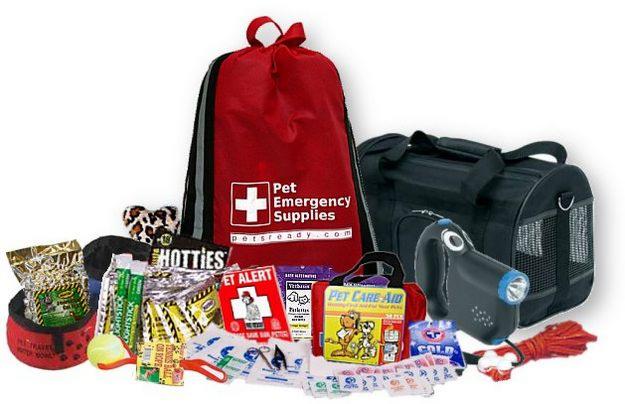
  • Pack a “pet survival” kit: Include pet food, bottled water, medications, veterinary records, cat litter/pan, food dishes, leashes and a first aid kit.
  • Make sure identification tags are always up to date and securely fastened to your pet’s collar. If possible, attach the address and/or phone number of your evacuation site. Make sure you have a current photo of your pet for identification purposes.
  • Make sure you have a secure pet carrier, leash or harness in case your pet panics and tries to escape.
  • Keep your pet carriers and evacuation kits in an easily accessible location.
Pets should never be left home alone during an emergency. During Hurricane Floyd, a man leaving his flooded home noticed a neighbor’s dogs swimming in circles around the yard. Swimming over to investigate, the man discovered that the dogs had been left chained to a stake in the yard, and were swimming frantically just to stay alive.

FEMA says that if you have absolutely no alternative but to leave your pet at home, certain precautions can be taken to improve your pet’s safety and chance of survival. If you are forced to leave your pet at home alone, FEMA says to confine them to a safe area inside and leave them loose within that area with food and plenty of water. Remove the toilet tank lid, raise the seat and brace the bathroom door open to they can drink. Place a notice outside the home in a visible area, advising which pets are in the house and where they are located. Provide a phone number where you or a contact can be reached, as well as the name and number of your vet.

Do you have an evacuation plan for your pets? If so, what are the steps you'll take to keep your pets safe? 

All information in this blog post is from HealthyPet.com, an AAHA publication. 

  • Digg
  • Del.icio.us
  • StumbleUpon
  • Reddit
  • RSS

7 foods you should NEVER feed your cat

Some “people food” is safe for cats in small amounts, but certain items — like raw fish and eggs — are definitely hazardous. Dr. Sally Perea, a board-certified veterinary nutritionist at P&G Pet Care in Ohio, lists the top seven no-no foods for kitties:


Feline Food Offender #1: Raw Fish

“Human-grade sushi is generally safe for people, but it can cause gastrointestinal upset in cats,” says Dr. Perea. “There is thiaminase in raw fish that could break down an essential B vitamin called thiamine in cats. Thiamine deficiency can cause neurological problems — and even lead to convulsions.”

Feline Food Offender #2: Onions and Chives

Cats are considered two times more susceptible than dogs to the toxic allium components found in onions and chives, which can damage red blood cells even if a kitty only consumes a trace amount. “It doesn’t matter if the onion is cooked, raw or powdered,” says Dr. Perea. “Cats do not metabolize these compounds.”
For this reason, Dr. Perea cautions owners against offering human baby food to their cats to stimulate appetites, because it can contain onion powder, which could cause anemia in felines.

Feline Food Offender #3: Uncooked Eggs

Cats benefit from protein, but raw eggs may expose them to salmonella and other parasites that could lead to an inflamed pancreas, known as pancreatitis. Dr. Perea adds that it's safe to serve your kitty cooked eggs — but only on occasion, and in small amounts.

Feline Food Offender #4: Bones

Bones can splinter and cause a cat to choke, as well as block the intestinal tract, possibly even perforating the intestines. “Never give a bone to a cat,” says Dr. Perea. “And never give them anything that is as hard as their teeth, because it can cause dental fractures."

Feline Food Offender #5: Fat Trimmings

Feeding your feline fat trimmings could lead to gastrointestinal upset and even pancreatitis.

Feline Food Offender #6: Caffeinated Drinks

Some cats may be drawn to lapping up your coffee, tea or soda, but according to Dr. Perea, too much caffeine consumption can cause an increased heart rate and agitation in your kitty.

Feline Food Offender #7: Milk

In general, a cat’s digestive tract becomes somewhat lactose intolerant once a cat reaches adulthood, causing diarrhea and other stomach upsets.

Foods That Are OK to Offer Your Kitty

On occasion, Dr. Perea says it is safe to give your cat a little canned tuna or a small bit of cheese. But keep in mind that felines only need about 200 to 250 calories a day, so go easy on the portions, limiting treats to about 10 percent (20 to 25 calories) of their daily intake needs.

All information in this blog post is from vetSTREET via the GVMA. 

  • Digg
  • Del.icio.us
  • StumbleUpon
  • Reddit
  • RSS

Pet Water Safety

Pet Water Safety

Water sports and recreation can be a terrific way to spend some quality fun time with your pet. Many dogs can enjoy the water for fun. Whether you’re considering taking your pooch on a boat, or to the ocean, lake, swimming pool, pond or ice, make sure you follow these simple common sense steps suggested by Dr. Pettit to keep your pet safe.


Pet Water Safety: Rated PG

Parental guidance or PG is the most important thing you can remember about pet water safety. Always supervise your pet near any body of water and be prepared to intervene if he/she gets into trouble.

If it’s Not Safe for People, It’s Not Safe for Pets

Always obey warning signs such as “Do Not Swim,” “Beach Closed,” or “Thin Ice.” Such warnings represent as much danger for your pet as for you.

Make Sure Your Dog Can Swim First

Not all dogs are natural swimmers. Those breeds with short legs, dense body conditions, and/or absent or cropped tails often find it difficult to stay afloat. Dogs with flat noses have a harder time breathing when in the water. Older dogs and those that are overweight may tire easily. Some dogs are even afraid of the water. Introduce your dog to water gradually in a controlled situation until you know he/she can swim.

Make Sure the Water is Clean

Lakes, ponds and rivers may contain chemical contaminants, algae and bacteria or other microorganisms that can threaten your pet’s health through skin exposure or ingestion. Avoid any water that is discolored or smells bad, or is known to receive runoff from industry, farm activity or municipal sewage.

Consider the Temperature

Cold water can quickly lower your pet’s body temperature and lead to hypothermia. If it is too cold for you, it is too cold for your pet. Also remember, extreme summer heat can lead to heat stroke for your pet.

Keep Fresh Drinking Water Available

Pool water contains chlorine and other chemicals that can cause gastrointestinal upset if consumed in large quantities. Natural bodies of water can contain chemical poisons and infectious organisms. Encourage your pet to drink from your fresh water supply and he/she will be less likely to drink water that may be harmful.

Consider Your Pet’s Health Conditions

Dogs that are prone to skin and ear infections should not be exposed to frequent swimming since chronic moisture can encourage such infections. While swimming is excellent exercise for the arthritic pet, don’t let him/her overdo it or he/she will be in pain afterward.

Life Vests

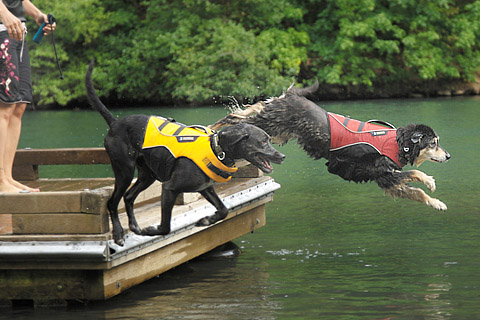
Your pet should wear a life vest when in any body of water that is too deep for him/her to walk on the bottom. Any circumstance where it is advisable for a person to wear a life vest is one where your pet should wear it as well. Be sure it is sized and designed for a proper fit.

First Aid Kit

Sharp objects such as stones, sea shells, fishhooks, glass or metal can lie unseen beneath the water, and cut your pet’s feet and legs. Keep a first aid kit on hand with a disinfectant such as iodine, an antibiotic ointment for superficial wounds, and sterile bandage material. Deep wounds should receive immediate medical attention.

Stay Away from Thin Ice!

Even a small pet can fall through ice. Keep your pet o leash or voice control. If your pet does stray onto the ice, do not try to follow. If he/she falls in, call 911 for professional help. Once he/she is rescued, dry thoroughly, and wrap your pet in warm blankets. Seek immediate emergency care. Even brief exposure to very cold water can cause life-threatening hypothermia.

Pool Safety

Chemicals in properly balanced pool water are generally safe for pets, although drinking a large amount of the water can cause gastrointestinal upset. Lead your pet to the stairs or steps and show him how to get out of the water. Once you know he/she is a comfortable swimmer, “startle” him into the water to be sure he/she can find his/her way out in an emergency situation.

Ocean Safety

A properly fitted life vest is particularly important because pets can be pulled under by strong tides and undercurrents. Be aware of jellyfish and other sea animals that might be harmful for your pet, and observe all warnings regarding the presence of dangerous wildlife or dangerous water conditions.

Boating Safety

Your pet may look cute perched on the bow of your boat, but dogs can fall off as easily as they fall out of pickup trucks! Make sure he/she is wearing a life vest, and is secured by a leash or crate when the boat is moving. This will prevent drowning or injury by the boat propellers.

End with a Good Bath

After a day of swimming, bathe your pet with a mild shampoo to remove chlorine, sea salt and any other potential contaminants. Use an ear cleaner to rinse and dry the ears, and flush his/her eyes with sterile saline solution to prevent irritation.

Talk to Your Veterinarian

Your veterinarian is an excellent source of advice about your particular pet and any special considerations for his/her safety during water recreation. He/she can advise you regarding eye, ear and skin care, as well as vaccinations to protect against certain water-borne diseases.

Sleep Well!

Don’t be surprised if your pet is unusually tired after a day in the sun and the water. If your pet doesn’t swim often, he/she may seem stiff and sore, and your pet’s tail may appear “broken” the next day. Don’t worry—a little muscle soreness is to be expected after unaccustomed exercise. You may be feeling it too!


All info in this blog post is from Healthy Pet

  • Digg
  • Del.icio.us
  • StumbleUpon
  • Reddit
  • RSS

Flea and Heartworm Prevention

There seem to be more and more products out there that claim to take care of fleas, ticks and heartworms. With so many to choose from it can be quite confusing. This blog post is intended to educate you about the products that Animal General Hospital carries. If you have any questions please ask your veterinarian! 


If you click on the product name you will be redirected to the manufacturers website:

For Dogs:

Trifexis- Monthly tablet for the prevention of heartworm disease. It also kills fleas and is indicated for the prevention and treatment of flea infestations and the treatment and control of adult hookworm, roundworm, and whipworms in dogs and puppies 8 weeks of age or older, and five pounds of body weight or greater. A yearly (negative) heartworm test is required in order to purchase this preventative. 

Heartgard- Monthly chewable for the prevention of heartworm disease and to treat and control roundworm and hookworm infections in dogs. 

Proheart 6- A bi-yearly injection given by the veterinarian for the prevention of heartworm disease. It also treats and prevents larval and adult hookworm infections. Proheart 6 can be administered in dogs and puppies six months of age and older. A yearly (negative) heartworm test is required in order to purchase this preventative.

Advantage Multi- Monthly topical (liquid) for the prevention of heartworm disease. It also kills adult fleas and is indicated for the treatment of flea infestations. Treatment and control of hookworms, roundworms and whipworms. For dogs and puppies 7 weeks of age and older. A yearly (negative) heartworm test is required in order to purchase this preventative.

K9 Advantix- Monthly topical (liquid) for the prevention and treatment of ticks, fleas, mosquitoes, biting flies and lice. For dogs and puppies 7 weeks of age and older. 

Frontline- Monthly topical (liquid) for the treatment and control of fleas, ticks and chewing lice. For dogs and puppies 8 weeks of age and older. 

Comfortis- Monthly chewable for the treatment and prevention of flea infestations. For dogs and puppies 14 weeks of age and older. 


For Cats: 

Advantage Multi- Monthly topical (liquid) for the prevention of heartworm disease. Kills adult fleas and is indicated for the treatment of flea infestations. Treatment and control of ear mite infestations, hookworms and roundworms. For cats and kittens 9 weeks of age or older. 

Frontline- Monthly topical (liquid) for the treatment and control of fleas, ticks and chewing lice. For cats and kittens 8 weeks or older. 

  • Digg
  • Del.icio.us
  • StumbleUpon
  • Reddit
  • RSS