Powered by Blogger.
RSS

Four Reasons to Take Your Cat to the Vet Regularly


A 2009 study by the cat litter company Feline Pine provided some alarming revelations about how rarely cats go to the vet. Of the 720 people who responded to the survey, more than a third of them only took their cat to the vet only if the animal was sick or injured. Worse yet, only 17 percent had their cats regularly vaccinated against rabies and distemper. In order to raise awareness about the importance of annual vet visits, the company started an education campaign, National Take Your Cat to the Vet Day. That day is Wednesday, Aug. 22, and here are four important reasons for regular check-ups.


1. Early warning

Yearly physical exams allow your vet to detect early warning signs for health problems. For example, a heart murmur could lead to heart failure or be a sign of thyroid disease; and dental disease could lead to systemic infections that damage the liver, kidneys, or heart.

2. Vaccinations

If you live in the United States, it’s required by law that you vaccinate your cat against rabies. If your cat isn’t up to date on her rabies vaccine and she is bitten by a rabid animal, she will almost certainly end up being put down. There are a couple of other “core” vaccines that cats should get as well. Your vet will work with you to tailor a vaccine plan appropriate to your cat’s lifestyle and make sure she doesn’t get unnecessary vaccines.

3. Familiarity

Yearly exams will help your vet get to know your cat, and you. Cats can’t tell people what hurts or why they don’t feel well. The better your vet knows your cat’s regular weight, coat condition, and personality, the better she’ll be able to find out what’s wrong with your cat when you bring him in because he's “not acting right.”

4. Trust and communication

Regular vet visits will help you feel more comfortable with your cat’s veterinarian. The more you see your vet handling your cat and the more you talk to her, the more you’ll come to trust her. Building trust in your vet when your cat is happy and healthy will go a long way toward helping you cope, and trust in your vet’s skills and abilities, if your cat ever needs emergency care or becomes seriously ill.
All information in this post is from Catster

  • Digg
  • Del.icio.us
  • StumbleUpon
  • Reddit
  • RSS

Motion Sickness in Dogs


A car ride! A car ride! A car ride! For most dogs it’s the greatest thing since the cookie. But a dog can get motion sickness just like people do, which can mean that even a short car trip becomes stressful for the dog — and disgusting for the owner. Fortunately, there are ways to ease or eliminate a dog’s motion sickness, including conditioning and medication.

Overview

Motion sickness is much more common in puppies and young dogs than in older dogs, presumably because the ear structures used for balance aren’t fully developed in puppies. If the first few car rides of a dog’s life result in nausea, the dog may begin to equate travel with uncomfortable sensations, even after his or her balance system fully matures. Therefore, a dog who suffers motion sickness should be treated as soon as possible.
Stress can also add to motion sickness; if a dog rides in a car only to go to the veterinarian the negative sensations associated with travel can be more pronounced. If a dog continues to appear ill even after several car rides, the owner should consult a veterinarian about treatment for motion sickness.

Signs and Identification

Not all motion sickness manifests as vomiting. Signs of motion sickness in dogs include:
  • Inactivity
  • Listlessness
  • Uneasiness
  • Yawning or panting
  • Whining
  • Excessive drooling
  • Vomiting (even on an empty stomach)
  • Fear of cars
If a dog develops a secondary fear of riding in cars, a veterinarian or veterinary behaviorist can help determine whether the cause is motion sickness or something else, such as an orthopedic condition or anxiety unrelated to motion sickness.

Affected Breeds

All breeds of dogs seem equally susceptible to motion sickness.

Treatment

To help owners prevent or treat motion sickness in dogs, veterinarians often recommend one or more of the following approaches:
  • Help your dog face forward while traveling by strapping him or her into the seat with a specially designed canine seatbelt.
  • If you buckle your dog into the front passenger seat, position the seat as far as possible from the dashboard or disable the passenger air bag, which can be hazardous to dogs.
  • Lower car windows a few inches to equalize the inside and outside air pressures.
  • Keep the vehicle cool.
  • Limit your dog’s food and water consumption before travel.
  • Give your dog a treat or two every time he or she gets into the car.
  • Give your dog a toy that he or she enjoys and can have only in the car.
  • Give your dog a one- to two-week break from car rides.
  • Use a different vehicle to avoid triggering your dog’s negative response to your usual vehicle.
  • Take short car rides to places a dog enjoys, such as the park, especially if your dog associates car rides only with trips to the veterinarian’s office.
Gradually build up a dog’s tolerance to car rides. The following steps should take a few days to a week:
  1. Accustom your dog to approaching the car without getting in it.
  2. Spend time with your dog in the car with the engine off.
  3. Take short trips (e.g., around the block).
  4. Take longer trips. Reward your dog with praise and/or treats every time he or she does something well.
If a dog doesn’t outgrow motion sickness or respond to conditioning techniques, consult your veterinarian about medication to help your dog. There is a medication approved for preventing vomiting due to motion sickness in dogs. However, if anxiety or other issues are involved, additional therapies may be recommended.

Prevention

In many cases treatment and prevention are the same thing, so see the list above.
All information in this post is from Vetstreet.

  • Digg
  • Del.icio.us
  • StumbleUpon
  • Reddit
  • RSS

4 Signs That Your Cat is in Heat


We all know how important it is to have our cat companions spayed or neutered. But sometimes time gets away from even the best-intentioned cat caretakers -- and before you know it, you’ve got a cat in heat on your hands. Don’t delay a trip to the vet if you see the following signs.

1. Increased appetite and restlessness

This is the first sign of proestrus, the earliest stage of a cat’s estrus, or heat, cycle. Other things you might notice are tomcats gathering around your home because your cat’s pheromones are attracting them. If you don’t notice the cats, you’ll probably notice their calling cards: You can’t miss the stench of tomcat spray.
Your cat’s vulva might be slightly enlarged and moist, but you probably won’t notice this because 1) she’ll probably lick off any discharge, and 2) because the odds are you’re not into closely examining your cat’s genitals. Proestrus lasts one or two days.

2. Creepy calling and meowing

When you hear a female cat in heat calling, the sound can be downright bone-chilling. As her urge to mate grows, the calls become almost alarming, as if she’s in pain. It can also make you crazy, because as her heat ramps up, the calling is going to get louder and more insistent, and could become almost constant.
If there weren’t tomcats at your doorstep before, there sure will be once your cat starts calling. Calling is an indication that she’s in full heat, or estrus.

3. A dramatic increase in affectionate behavior

If you thought your cat was a lovebug before, now she’ll probably be glued to you, constantly demanding your attention, weaving in and out of your legs, rubbing against you, shaking her pelvis, and rolling on the floor. But if you pick her up while she’s rolling around, she may grab your arm or even bite.

4. The "come hither" pose

If you stroke your cat’s back while she’s in heat, she’ll raise her hips to stick her butt in the air, twitch her tail to the side, and start treading with her hind feet.
These last three signs indicate that your cat is in full-on estrus and extremely receptive to being mated. She may become an escape artist, doing whatever she can to scratch her hormonal itch. Estrus lasts four to six days.
After your cat has been through the week to 10 days of proestrus and estrus, more commonly known as “heat,” she’ll go into the third stage, known as interestrus. During this stage, she’ll refuse to mate and aggressively attack any tomcat that gets in her way. If she didn’t mate during the heat cycle, she’ll remain in this interestrus stage for one to two weeks, and the whole process will start all over again.
                             
If your cat is older than about five months and begins showing these signs, get her to the vet for her spay as soon as you can. Cats will continue to go in and out of heat until they get pregnant or get spayed.
Cats who aren’t spayed have a much higher risk of developing mammary and uterine cancer, as well as polycystic ovaries, due to constantly fluctuating hormone levels. Spaying also eliminates the risk of a potentially fatal uterine infection called pyometra (I once saw a cat at a vet clinic that was dying from pyometra, and it was truly horrible). Your cat’s behavior will improve and you won’t have boy cats coming over to visit at all hours of the day and night.
But spaying isn't just good for your cat -- it’s good for your community, too. The fewer unwanted kittens that are brought into the world, the fewer cats will be killed in shelters due to lack of space.
All information in this post is from Catster

  • Digg
  • Del.icio.us
  • StumbleUpon
  • Reddit
  • RSS

Overweight Pets


Is your pet losing its waistline and looking a little plump? Is your pet not as active and lying around more? Does your pet pant and get tired easily?

If you answered yes to any of these questions, your pet may be overweight.

Overweight pets are seen in our veterinary practice every day and a good number of them have health issues. Pets can gain extra weight later in life because of their slowing metabolism, but obesity even in younger dogs and cats is commonly observed.

Since pets have a shorter life span compared to humans it is important to address the weight issue early for their health and quality of life.


The three most important things you can do to keep your pet’s weight at an optimum level are:

1. Biannual exams by your veterinarian. Your veterinarian will recommend blood work and other diagnostic testing as needed to make sure your pet does not have an underlying disease contributing to its obesity. Pets with endocrine diseases such as hypothyroidism, diabetes, and Cushing’s disease can have weight issues. Orthopedic and heart disease can also have an effect on a pet’s mobility and exercise tolerance.

2. Feed high quality food. What your pets eat have a huge effect on their body. Your pet may love a certain type of food because it tastes great, but it may have little to no nutritional value. Your veterinarian will recommend a high quality dog or cat food for your pet depending on their life stage (growing puppies and kittens have different nutritional requirements compared to geriatric pets). The most common reason pets are overweight is because owners are overfeeding them. Commercial dog/cat food will have general feeding guidelines on the bag, but they tend to overshoot in what the pet actually needs to be consuming. Your veterinarian will help determine how much you should feed your pet.

3. Exercise, exercise, exercise. Pets require daily exercise to help maintain a healthy weight. Dogs can release stress and build up their cardiovascular system when taken on daily walks. Playing ball, fetch, agility training, etc. can offer mental stimulation as well to help them become well-adjusted pets. Indoor cats require the same physical and mental exercise on a daily basis. There are many toys that cats love to play with such as the feather wand and squeaky mouse. Most cats enjoy the sight and sounds of the outside world, so providing them with a window seat would be beneficial for their mental stimulation.

Consult with your veterinarian to determine what needs to be done to help your pet lose weight. Every pet is different so your veterinarian will decide the proper weight loss program specifically for your pet.

As in people, weight loss needs to be done over weeks to months in a healthy manner. If you have an obese dog or cat, initiating a weight loss program for your pet could mean not only a healthier pet, but also a happier, more energetic companion.

All information in this blog is from Pet Smarts. 

  • Digg
  • Del.icio.us
  • StumbleUpon
  • Reddit
  • RSS

10 "Poison Pills" for Pets


10 "Poison Pills" for Pets

Anyone who takes medication prescribed for someone else puts themselves at risk of illness or even death - and this applies to your pets, too! Although there are many medications used in both animals and people, the effects, doses needed, and other things aren't always the same.


About one-quarter of all phone calls to the ASPCA Animal Poison Control Center (APCC) are about human medications. Your pet can easily ingest dropped pills or may be given harmful human medications by an unknowing owner, resulting in illness, or even death, of your pet.

The APCC provided us with the 10 most common human medication complaints they receive. Here they are, in order based on the number of complaints:

  1. Ibuprofen – Ibuprofen (Advil®, Motrin®) is the most common human medication ingested by pets. Many brands have a sweet outer coating that makes it appealing to pets (think "M&M," but a potentially deadly one). Ibuprofen can cause stomach ulcers and kidney failure.

  2. Tramadol – Tramadol (Ultram®) is a pain reliever. Your veterinarian may prescribe it for your pet, but only at a dose that's appropriate for your pet – never give your medication to your pet without first consulting your veterinarian! Too much tramadol can cause sedation or agitation, wobbliness, disorientation, vomiting, tremors and possibly seizures.

  3. Alprazolam – Alprazolam (Xanax®) is prescribed as an anti-anxiety medication and a sleep-aid. Most pets that ingest alprazolam can become sleepy and wobbly; however a few will become very agitated instead. These pills are commonly ingested by pets as people put them out on the nightstand so they remember to take them. Large doses of alprazolam can drop the blood pressure and could cause weakness or collapse.

  4. Adderall® – Adderall® is a combination of four different amphetamines and is used to treat Attention Deficit Hyperactivity Disorder (ADHD) in children. This medication doesn't have the same effect in pets as it does in people; it acts as a stimulant in our pets and causes elevated heart rate and body temperature, along with hyperactivity, tremors and seizures.

  5. Zolpidem – Zolpidem (Ambien®) is a sleep-aid for people. Pets commonly eat pills left on the bedside table. Zolpidem may make cats wobbly and sleepy, but most pets become very agitated and develop elevated heart rates.

  6. Clonazepam – Clonazepam (Klonopin®) is used as an anticonvulsant and anti-anxiety medication. It is sometimes also prescribed as a sleep-aid. When animals ingest clonazepam they can become sleep and wobbly. Too much clonazepam can lower the blood pressure, leading to weakness or collapse.

  7. Acetaminophen – Acetaminophen (Tylenol®) is a very common pain killer found in most households. Cats are extremely sensitive to acetaminophen, but dogs can be affected too. Acetaminophen can cause liver damage. It can also cause damage to your pet's red blood cells so that the cells are unable to carry oxygen – like your body, your pet's body needs oxygen to survive.

  8. Naproxen – Naproxen (Aleve®, Naprosyn®) is an over-the-counter pain reliever. Dogs and cats are very sensitive to naproxen and even small amounts can cause stomach ulcers and kidney failure.

  9. Duloxetine – Duloxetine (Cymbalta®) is prescribed as an antidepressant and anti-anxiety agent. When ingested by pets it can cause agitation, vocalization, tremors and seizures.

  10. Venlafaxine – Venlafaxine (Effexor®) is an antidepressant. For some unknown reason, cats love to eat the capsules. Ingestion can cause agitation, vocalization, tremors and seizures.

As you can tell from this list, a medication that does one thing for people does not necessarily do the same for our pets. And although this may be the list of the medications about which the APCC receives the largest numbers of complaints, remember that any human medication could pose a risk to your pets – not just these 10.

You can keep your pets safe by following simple common sense guidelines:

  • Always keep human medications away from pets unless you are specifically instructed by a veterinarian to give the medication;

  • Do not leave pills sitting on counter or any place a pet can get to them;

  • Do not leave pill bottles within reach of pets (You'll be surprised how fast your dog can chew through a pill bottle.);

  • If you're taking medications out of the bottle and you drop any of it, pick it up immediately so you know your pet won't be able to eat it;

  • Always contact your veterinarian if your pet has ingested any medication not prescribed for them;

  • Never give your medication (or any medications prescribed for a two-legged family member) to your pet without first consulting a veterinarian.

...and last, but not least, always keep the number for your veterinarian and the APCC handy. You don't want to be looking for it in an emergency situation! 

All info in this blog post is from the AVMA

  • Digg
  • Del.icio.us
  • StumbleUpon
  • Reddit
  • RSS

Breeds: Devon Rex!!

Devon Rex

An eye-catching breed that is still in its infancy, the Devon Rex will make its home in your arms and in your heart. Just independent enough to be an ideal cat for working families, the Devon will shower its people with love and attention when they are around, and stay out of trouble when they are not. And, because it sheds very little, it does not shower the home in hair. For those looking for a unique, warm, and loving companion, the Devon Rex is a perfect fit.


Physical Characteristics


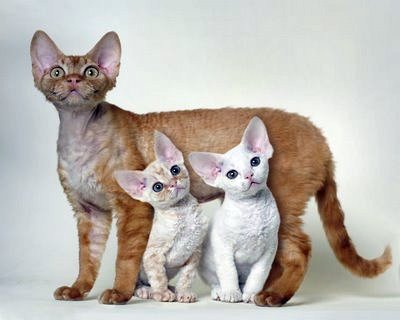
The Devon Rex is without a doubt, one of the most eye-catching and unique cat breeds in the feline fancy. Often described as alien or pixie-ish because of its large eyes and ears, the Devon has a way of capturing, and keeping the attention of all who enter into its aura. Overall, Devons give off a roguish air, with over-sized, cup deep ears, high cheek bones, fox-like eyes, and a short muzzle, set atop a slender neck and body. But, it is the hair of the Devon Rex that gives it its most unique feature. Often called the poodle of the cat world, both because of its appearance and its personality, its hair grows in silky curls and rippling waves -- an effect called rexing -- over its light weight frame.

This breed has three hair types: guard, awn, and down. But the guard coat is lighter than with other breeds. The awn and down coats are dense, soft, and close to the body, but the guard hairs, which form the outer coat, are wiry, short, sparse, and prone to breakage; there is some risk of temporary bald patches because of this fragility, with the hair typically growing back to normal lengths during seasonal periods of hair growth. This is one of the very few defects the Devon caries as a result of engineered breeding. The whisker pads are somewhat full, further accentuating the prominent cheekbones and narrow chin, but the whiskers themselves are like the guard hairs, wiry and short and prone to breakage. If this should happen with your Rex, you can rest assured that the whiskers do grow back, but they still will not grow to the length that can be seen in other cats. This only affects the outer appearance of the Devon, and should not be a concern.

Personality and Temperament


The Devon Rex is a true companion pet. Its personality is naturally outgoing and people centered, so much so that you may find yourself spending more time with your Devon than you imagined. Although they have a triple layer coat, they still have the need for added warmth, due to the coat being light and close to the skin. You will find your cat contentedly purring atop your warm electronics and appliances, on your lap, under your chin and on your shoulders, and in the middle of the night, its little engine is still running as it snuggles under the covers with you. The Devon is a real purr-a-matic, seemingly never running low on energy, or affection. Be prepared for a lot of petting, cuddling and caressing.

The Devon is often described as being dog-like, and in some ways this is true. It is not a talkative cat, but it will greet you at the door and follow you around as you do the housework, or hang out in the bathroom while you bathe. Waggish and full of mischief, they are good at keeping themselves, and everyone else entertained, whether it is clowning and playing games for attention, climbing the curtains (you will want to use sturdy weight curtains with this breed around), or hanging around the dining table, begging for scraps.

The Devon has a quiet voice, and does well enough around the house on its own. It is not known for tearing around the house, or getting into trouble when no one is looking. It is generally regarded as an ideal pet for working families. It finds a way to keep itself busy while waiting for its people to return, and happily finds its way back into their arms when they do arrive.

All information in this blog is from petMD.

  • Digg
  • Del.icio.us
  • StumbleUpon
  • Reddit
  • RSS

Mange in Dogs


Demodectic Mange


Mange (demodicosis) is an inflammatory disease in dogs caused by various types of the Demodex mite. When the number of mites inhabiting the hair follicles and skin of the dog become exorbitant, it can lead to skin lesions, genetic disorders, problems with the immune system and hair loss (alopecia). The severity of symptoms depends upon the type of mite inhabiting the dog.

The condition or disease described in this medical article can affect both dogs and cats. 


Symptoms and Types


Demodectic mange may either be localized and affect specific areas of the body, or generalized, where it affects the entire body. If localized, symptoms are usually mild, with lesions occurring in patches, especially on the face, trunk, or legs. If generalized, symptoms will be more widespread and appear across the body. These symptoms include alopecia, a redness of the skin (erythema), and the appearance of scales and lesions.

Causes


While an exact cause of mange in dogs is unknown, many experts believe genetic factors, such as problems with the immune system, may predispose a dog to developing mange.

Three species of mites have been identified to cause mange in dogs. While the mode of transmission is unknown for two of these, it is known that one type,Demodex canis, inhabits the skin and hair follicles and may transfer from mother to newborn during nursing.

Diagnosis


Skin scrapings are used to find and diagnose demodicosis in dogs. Plucking hairs may also help identify the mite responsible for the condition.

If performed, a urine test will identify other possible diagnoses, namely those caused by a disorder with the dog’s metabolic system. Alternative diagnoses may include bacterial infection in the hair follicle.

Sarcoptic Mange


Sarcoptic mange is a highly contagious skin disease found in dogs, caused by the Sarcoptes scabiei mite. These mites will burrow through the skin causing intense itching and irritation. The scratching that results from mange is what causes the majority of the animal's hair to fall out. This is a treatable medical condition, but is highly contagious for other animals and humans. Pet owners are advised to keep the dog quarantined while it is being treated for mange.

Symptoms


  • Intense scratching
  • Skin rash
  • Crust formation in the affected area
  • Hair loss (alopecia) 

Causes


The most common cause of mange in dogs is exposure to another infected animal, as the mites quickly move from animal to animal. Kennels, animal shelters, dog parks, groomers and veterinary clinics have a high exposure rate of mange due to the close proximity with animals that are infected. The exposure generally occurs about two to six weeks before the first symptoms of mange are displayed.

Diagnosis


After ruling out food allergies, chiggers, and bacterial infections of the skin (folliculitis), your veterinarian will conduct a physical inspection of your dog to identify the type of microorganism that may have embedded into its skin; in this case, mites.

All information in this post is from PetMD

  • Digg
  • Del.icio.us
  • StumbleUpon
  • Reddit
  • RSS