Powered by Blogger.
RSS

Are You A Stool-Watcher??


If you’re like most pet owners, you’ll probably confess to having occasionally expressed interest in the quality of your critter’s poop.
In fact, market research conducted by pet food companies has determined that an overwhelming majority of animal caretakers are just like you: They’re stool-watchers.  
Apparently, the pervasive perception among pet owners holds that stool size, color and consistency are critical measures of an animal’s fundamental well-being.
As a veterinarian, I get treated to the most descriptive explanations, alarmed observations and dramatic tirades on the subject that you could ever imagine. This might seem somewhat uncomfortable, yet I can absolutely get behind any behavior or sentiment — gross as it may be — that furthers animal health.
Sure, it’s somewhat odd and disgusting that my clients care so much about their pets’ excrement, but how can I complain? After all, this privileged information will undeniably prove useful should I need to know how my patient’s bowels are doing. And I usually do.
But an owner’s description can only get me so far. That’s why we strongly recommend you either bring in a sample or allow us to scoop our own poop in the exam room.
Either way, the point is the same: Evaluating feces for color, texture, microscopic contents and even smell can help us identify digestive issues, as well as all kinds of potentially problematic disorders.
Here's a brief rundown of the positive power of poop:

Poop Can Tell Us About . . . Digestion

Knowing exactly what a pet's stool looks like can help to clue us in about the digestive and absorptive processes that are taking place. The importance of the liver in digestion and absorption, for example, means that the organ can be assessed — at least in part — by evaluating a pet's poo.

Poop Can Tell Us About . . . Bacteria

There's so much that we don’t know about the teeming bacterial colonies living inside our pets’ intestines. Nonetheless, evaluating the stool for the presence of very specific bacteria — like salmonella — is doable. So, too, is the more direct observation of bacteria under a microscope.

Poop Can Tell Us About . . . Gastrointestinal Parasites

Roundworms, hookworms, whipworms, Giardia and coccidia are the most common gastrointestinal parasitesidentified during a microscopic fecal examination. Small, rice-like tapeworm segments, however, are more likely to be identified upon observation of the feces with the naked eye. Yes, yuck!

Poop Can Tell Us About . . . Viral Diseases

Some viruses are detectable by directly testing the feces. Parvovirus infection, for example, can be diagnosed by testing a dog’s stool via an in-hospital kit.

Poop Can Tell Us About . . . Other Medical Conditions

Blood in the stool can mean everything from a simple irritation to a life-threatening stomach ulcer or a clotting problem. And it’s not just the bright red stuff that matters — testing the stool for the presence of digested blood is just as important.
The abnormal consistency, volume, texture, color and pattern of a bowel movement can also often tell us which part of the gastrointestinal tract occasioned the abnormality. Large volumes of watery stool tend to be related to problems within the small intestine, while small, strained volumes emitted frequently point to the colon as the likeliest offender.
So if you are feeling shy about telling your vet about your pet's poop, don't. It gives them helpful information.


All information from Vet Street

  • Digg
  • Del.icio.us
  • StumbleUpon
  • Reddit
  • RSS

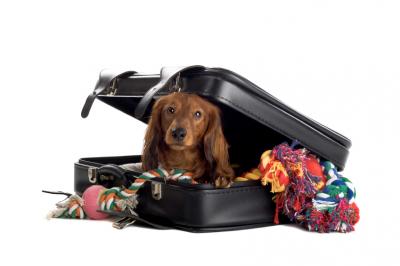
What you should know about traveling with your pet

We talked about traveling with your pet before but since the holidays are fast approaching I wanted to talk about it again. This time the info comes from the Georgia Veterinary Medical Association (GVMA). 
Planning and Preparation
Planning and preparation are necessary when traveling with family pets. Consider whether your pet is comfortable when traveling. Some animals, like some people, function better in familiar surroundings. A car-sick animal can make a trip miserable for everyone. Some dogs and cats cannot withstand the rigors of travel due to illness, injury, or temperament. If this is the case, discuss options such as using a reliable pet-sitter or a clean, well-managed boarding facility with your veterinarian.

If you will be staying with friends along the way, be considerate. Find out in advance if the pet is welcome. The same goes for hotels, motels, parks, and campgrounds. Always check whether pets are allowed or kennel facilities are available. If the pet must be left alone in a hotel room, place a "Do Not Disturb" sign on the door and inform the maid and the front desk. Consider bringing along a portable kennel for use in hotel rooms or the homes of friends or relatives who are not comfortable having your pet loose when no one is home.

A few general tips apply whether you travel by car or plane. Be sure your pet is properly identified with a current tag and/or a microchip. Grooming (bathing, combing, trimming nails) before a trip, plus having its favorite food, toy(s), and dishes available will make your pet more comfortable. Have proof of rabies vaccination and a current health certificate with you when crossing state or international borders. Keep a photo of your pet with you to help with identification in case your pet is lost.

Before undertaking any trip, consult your veterinarian to be sure that all required vaccinations are up-to-date and to receive a health certificate within ten days of travel.


Travel by Air
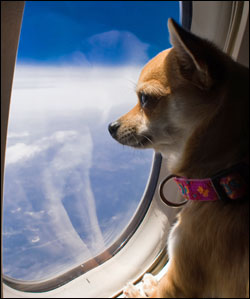
Air travel is of most concern to pet owners. The airlines sometimes update their regulations on pet travel including restrictions on breeds and size, and may charge for checked kennels. Most airlines require a health certificate issued within 10 days prior to travel. Check with the airline well in advance for their current regulations. Many of the major airlines allow cats and small dogs to travel in specially designed carry-on luggage that will fit under the seat.

Federal regulations require that pets be at least 8 weeks old and weaned at least 5 days before flying. Always try to book a nonstop flight and avoid plane changes and busy holidays whenever possible. During warm weather periods, choose early morning or late evening flights. In colder months, choose midday flights. Regulations associated with the Federal Animal Welfare Act prohibit airlines from accepting dogs and cats for shipment if the airline cannot prevent exposure of the animal to temperatures less than 45 degrees F (7.2 C) or more than 85 degrees F (29.5 C) for more than 45 minutes when the animal is transferred between the terminal and the plane, or for more than 4 hours when the animal is in a holding facility. However, the prohibition against exposure to temperatures below 45 degrees F is waived if a veterinarian provides an acclimation certificate stating that the dog or cat can be exposed to lower temperatures. Your veterinarian cannot give a certificate allowing exposures to temperatures above 85 degrees F for more than 45 minutes. Brachycephalic (short-nosed) dogs may have more difficulty with air travel.

Reconfirm your flight arrangements the day before you leave to ensure there have been no unexpected flight changes. Arrive at the airport early, exercise your pet, personally place it in its crate, and pick up the animal promptly upon arrival at your destination. When boarding the plane, let the flight attendant know that your pet is in the cargo hold. If your pet will be traveling with you in the cabin, arrange to check in as late as possible to reduce the amount of time your pet will have to spend in the busy terminal.

Defective kennels are the most common cause of escaped or injured animals during air travel. Approved transport crates, available from most airlines or pet shops, must:

  • Be large enough to allow the animal to stand (without touching the top of the cage), sit erect, turn around, and lie down in a natural position.
  • Latch securely.
  • Be strong and free of interior protrusions, with handle or grips.
  • Have a solid, leak-proof bottom that is covered with plenty of absorbent material.
  • Be appropriately and clearly labeled. Include your name, home address, home phone number, and destination contact information, as well as a designation of "Live Animals," with arrows indicating the crate's upright position. In addition, carry your pet's photo and health information with you on the plane for easy identification in the event the cage label is lost.
  • Be adequately ventilated so that airflow is not impeded.

Before leaving on your trip, take time to accustom your pet to the crate in which it will be traveling.

Ask your veterinarian for specific feeding instructions. For your pet's comfort, air travel on an almost empty stomach is usually recommended. The age and size of your pet, time and distance of the flight, and your pet's regular dietary routine will be considered when feeding recommendations are made. It is recommended that you not give tranquilizers to your pet when traveling by air because they can increase the risk of heart or respiratory problems.


Travel by Car
If your pet is not accustomed to car travel, take it for a few short rides before your trip so it will feel confident that a car outing does not necessarily mean a trip to the veterinarian or an unpleasant destination. Cats should always be confined to a cage or in a cat carrier to allow them to feel secure and prevent them from crawling under your feet while you are driving.

A dog that must ride in a truck bed should be confined in a protective kennel that is fastened to the truck bed. Dogs riding in a car should not ride in the passenger seat if it is equipped with an airbag, and should not be allowed to sit on the driver's lap. Harnesses, tethers, and other accessories to secure pets during car travel are available at most pet stores. Accustom your dog to a seatbelt harness by attaching a leash and taking your dog for short walks while wearing it. Offer your dog a treat and praise at the end of the walk to associate a positive experience with wearing the harness. Pets should not be allowed to ride with their heads outside car windows. Particles of dirt or other debris can enter the eyes, ears, and nose, causing injury or infection.

Stick to your regular feeding routine and give the main meal at the end of the day or when you reach your destination. Feeding dry food will be more convenient, assuming your pet readily consumes it. Dispose of unused canned food unless it can be refrigerated. Take along a plastic jug of cold water in case other reliable water sources are not available. Give small portions of food and water and plan to stop every two hours for exercise. Remember to include a leash with your pet's traveling supplies. If your dog is has a problem with carsickness, your veterinarian can prescribe medication that will help the dog feel comfortable during a long car trip. Pets should not be left unattended in cars.


Travel by Bus or Train
Most states prohibit animals from riding on buses and similar regulations restrict travel on trains. Exceptions are made for guide and service dogs accompanying blind and disabled persons. Consult your local carriers in advance for information.


Camping With Pets
Traveling to country settings with your pet presents its own challenges. Skunks, raccoons, porcupines, snakes, and other wildlife can bite or otherwise injure your pet. Keep your pet within sight and on a leash. Be considerate of other campers. Be sure to ask your veterinarian about flea, tick, and heartworm prevention before you leave.

Additional Pet Travel and Health Tips
  • When traveling by car, pack a simple pet first-aid kit that includes assorted bandages, antiseptic cream, an antidiarrheal medication that is safe for pets (ask your veterinarian to suggest a product), gauze squares, and the phone numbers of your veterinarian, a national poison control hotline, and a 24-hour emergency veterinary hospital
  • In addition to a standard identification tag (which should be labeled with your name, home address, and phone number), your pet's collar should include a travel tag with information on where you are staying while away from home. Should your pet become lost, this will allow you to be contacted locally.
  • Perform a daily "health check" on your pet when away from home. In unfamiliar surroundings, your pet's appetite, energy, and disposition may change. Watch for unusual discharges from the nose and eyes, excessive scratching or biting of any body part, abnormal elimination, or excessive water consumption. Visit a local veterinarian if you are concerned about any physical or behavioral changes.

For more Information and helpful tips on traveling with your pet
United States Department of Transportation Aviation Consumer Protection Divisionhttp://airconsumer.ost.dot.gov/publications/animals.htm

United States Department of Agriculture Animal Care Pet Travel Pagehttp://www.aphis.usda.gov/animal_welfare/pet_travel/pet_travel.shtml

International Air Transport Association Live Animals Transportation by Airhttp://www.iata.org/whatwedo/cargo/live_animals/index.html


  • Digg
  • Del.icio.us
  • StumbleUpon
  • Reddit
  • RSS

Best Way to Introduce a New Kitten


Best Way to Introduce a New Kitten

Your life with your new kitten begins on the ride home. First, cats should always be transported in some kind of carrier in the car. By teaching your kitten to ride in a confined location, you are providing safety as well as starting a routine that you can maintain for future car rides.
Upon arriving at home, place the kitten in a small, quiet area with food and a litter box. If the kitten is very tiny, a small litter box with low sides will be necessary at first. If possible, duplicate the type of litter material that was used in the kitten’s previous home

Kitten Proofing the Home
Set up a safe and secure area where you can leave your kitten when you are not available for supervision. This location should have a food bowl, water bowl, litter box, play toys, a scratching post, and a resting area; be sure the space is big enough to accommodate all of these things. 
Since it is advisable to feed your kitten multiple small meals throughout the day, you may choose to also provide a feeding area in this room. All kittens and cats will need time to investigate their new surroundings, but make sure to inspect the area for nooks and crannies where a kitten might hide or get stuck. For a new kitten this is a more manageable task if you limit the available space initially. Be sure that any area where your kitten is allowed to roam has been effectively cat-proofed, which includes anywhere the kitten can jump or climb. Potentially dangerous items like electric cords and items that might be chewed or swallowed, such as thread, rubber bands, paper clips, or children’s toys, should be booby trapped or kept out of reach. (See Controlling Undesirable Behavior in Cats) After your new kitten has had some quiet time in a restricted location, slowly allow access to other areas of the home under your supervision.

Kittens are natural explorers and will use their claws to climb up onto anything possible. In the first few weeks, slow access to the home will allow for exploration as well as the ability for you to monitor the kitten's behavior.

Introducing the New Kitten to Other Pets
Although some kittens may show fear and defensive postures toward other pets in the home, most young kittens are playful and inquisitive around other animals. Therefore, it is often the existing pets that can pose more of a problem. If you know or suspect that your adult dog or cat might be aggressive toward the kitten, then you should seek professional behavior advice before introducing the pets to each other.

The kitten should be given a safe and secure area that provides for all of its needs (as described above), and introductions with the existing family pets should be carefully supervised. At the first introduction there may be no immediate problems, and reinforcement of desirable responses may be all that is required.

Introducing the New Kitten to Your Dog
If there is some mild anxiety on the part of your dog, the introductions will need to be controlled, gradual, supervised, and always positive. Begin by placing your new kitten in a carrier or on a leash and harness so that it will not provoke the dog. Using a leash to control your dog, use favored rewards and training commands to encourage your dog to sit or stay calmly in the presence of the cat. Dogs that are not well trained to settle on command may need their training reviewed and improved upon before introduction to any new pet. Alternatively, a leash and head halter may be used for more immediate control and safety.  Calm investigation should then be encouraged and reinforced.  Any initial anxiety on the part of the dog or kitten should soon decrease.
If the dog is prevented from rough play and chasing, the kitten should quickly learn its limits with the dog, including how to avoid confrontation by climbing or hiding. Initially it would be best to keep a dog and a kitten separated unless supervised. If there is still the possibility of aggression or injury after the cautious initial introductions, then a behavior consultation would be advisable.

Introducing the New Kitten to Your Cat
Most adult cats are fairly tolerant of kittens. Keeping the kitten in its own area and then allowing introductions when the cats are eating or playing should help to decrease any initial anxiety. A crate, or a leash and harness, can be used to control one or both of the cats during initial introductions. A synthetic cheek gland scent, either as a spray or diffuser, may also be useful for easing introductions. Most cats and kittens will soon work out a relationship on their own without injury. However, if there is a threat of aggression, a gradual introduction program will need to be followed.

All information from Pet MD

  • Digg
  • Del.icio.us
  • StumbleUpon
  • Reddit
  • RSS

10 Ways Your Cat Shows Love


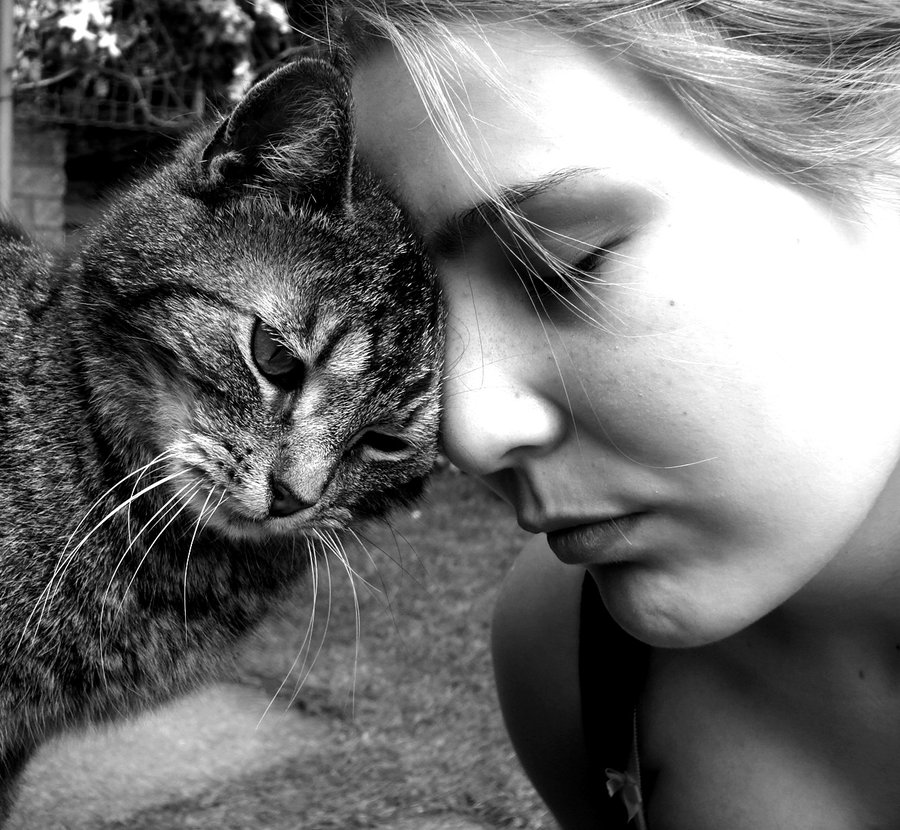
1. Lightly touching her forehead against you
Also called head butting, this feline act of affection is delivered only to the A-listers in a cat’s life. Your cat will face you, lower her head and lean forward so that the top of her head touches your forehead, face or other body part. This loving touch can often release feel-good hormones called endorphins in your cat and you.

2. Cheek rubbing you
Think of your cat as a feline graffiti artist. To make her turf really feel like home, she will rub her cheeks against the corners of furniture and, possibly, your legs or hands when you pet her. This act secretes oils from her facial glands. It’s her way of claiming you as her own. Just be grateful that she does so by cheek rubbing, not spraying.

3. Twitching the tip of her tail
The feline tail acts like a mood barometer. The tail puffs out when your cat is frightened or agitated. Conversely, your cat expresses love to you when she approaches you with her tail hoisted lazily up in the air and the very tip twitches. In cat speak, she is saying, “You rock my world!”

4. Holding eye contact and sharing a soft blink
Don’t expect a cat to maintain a steady eye-to-eye stare with a new house guest  Cats save eye contact for people they know and trust, like you. The bond is accented when she blinks softly at you. This is the equivalent of a kitty kiss. Respond by softly blinking back.

5. Turning on the purr power
This steady, rhythmic sound emitted when your cat inhales and exhales is often associated with contentment. But cats also purr when they need to self-calm or while nursing a litter; however, your cat saves the special full-bodied rumble as a smile directed to you. It is her way of saying, “I love you.”

6. Sitting on you or beside you
Cats crave warm places to nap and sleep, but when they bypass a comfy cat bed or your bedroom pillow to perch on your lap, you should feel honored. Your cat has sized up her options and is conveying that she prefers being with you rather than being by herself in her cat bed.

7. Kneading her paws on your lap
If you need a sign it is time to trim your cat’s nails, nothing is clearer than when she perches on your lap, purrs and starts kneading (making biscuits) your thighs with her front paws. But this is also a sign of affection. Experts say that this action beckons your adult cat back to a safe, welcoming memory when she was nuzzling her mother for milk as a newborn kitten. She is being affectionate and a bit nostalgic.


8. Licking your hair and earlobes
OK, neither of these actions may rate on your top 10 list of affection preferences, but your cat is regarding you as another cat — albeit a big one — in her inner circle. Only special “cats” are deemed worthy of these special grooming sessions. In a multi-cat household, mutual grooming is a sign of trust and friendship. Pay attention to which cats, if any, in your home team up for mutual grooming. You may be the only one meriting such a gift!

9. Bringing you dead mice, birds and other so-called gifts
Evolution and domestication have not stripped your cat of her inner hunter. After a successful hunt, she may deposit a mouse head or lizard tail in a place she knows you will visit — like your pillow. Yuck? Yes, but your cat is sharing her prey prize with you, a true sign of trusted friendship.

10. Emitting a high-pitched trill
Cats are capable of more than a dozen vocalizations, ranging from the hiss to the meow. Listen carefully for the high-pitched trill or chirp. These sounds convey affection and attention — not a feline demand for second helpings in her food bowl. Trill back, watch her reaction and enjoy a true cat chat.


All information from Vet Street.

  • Digg
  • Del.icio.us
  • StumbleUpon
  • Reddit
  • RSS

What Do Animals See in the Mirror?


While many may think this common question is open to debate — or even a little silly —  it’s actually neither. In psychology circles, the mirror test is considered an important evaluation of self-awareness in animals and a sign of the normal development of cognitive skills in children.
Humans are typically 18 months old before they are able to recognize themselves in the mirror. Among animals, currently only higher primates, dolphins, orcas, elephants and, surprisingly, European magpies are known to recognize that what they see in a mirror is a reflection of themselves. Even more interesting, perhaps, is that while pigs show no sign of recognizing their own reflections, they are able to use other information seen in the mirror, such as identifying the location of food placed behind them.

That doesn't necessarily mean other animals aren't intelligent enough to know when they run across other signs of themselves. The animals who “pass” the mirror test rely on vision as their primary sense. When a young cat or dog first sees his image in the mirror, he often reacts as if a strange animal suddenly appeared. But when the image doesn't pass the “sniff test,” the pet generally decides to ignore it for good. Animals do recognize their own urine smell, however, as anyone who has ever walked a male dog knows. Checking “pee-mail” and hitting “reply all” with your own scented urine is a priority in any male dog’s to-do list.

All information from vetStreet

  • Digg
  • Del.icio.us
  • StumbleUpon
  • Reddit
  • RSS

Run, Spot, Run!


See Spot run. Spot's having fun...or is he? Just as running isn't the sport for everyone, it's not the sport for every dog. Even if your dog seems to love chasing things and running around the yard, that doesn't mean your pooch will take to running.

The pros of a canine running partner can be numerous. Many runners say their dog enjoys running and helps keep them motivated – after all, you might be able to shrug off your human workout partner's teasing when you skip a workout, but it's tough to ignore the expectant look of a canine workout partner (or their cold nose against your skin, which is much more effective than an alarm clock!). It can be great exercise and, given our two- and four-legged populations' trend toward being overweight, it's pretty clear we all need more exercise. Running can also be a good bonding experience for both of you.


That said, there is a downside to running with your canine companion. For one, running injuries aren't restricted to two-legged runners. Remember that you're most likely wearing well-padded shoes that provide support and cushion when you run, but your dog is barefoot. Being barefoot isn't that tough when a dog is running on grass or other natural ground surfaces, but running on concrete, asphalt, gravel or other hard surfaces can put a lot of stress on your dog's body and can put them at risk of injury to their legs, paws or paw pads.

Your dog's breed (or predominant breed) may play a role, too. Keep in mind that a Husky or other breed with a thick hair coat might be much happier in cold weather and pretty miserable in the heat, but a short-coated dog such as a greyhound or whippet might need to wear a jacket to run in cooler weather.

If you have a short-nosed (the technical term is "brachycephalic") dog, such as a pug, boxer, mastiff or bulldog (for a longer list, check out the Wikipedia entry), running may too risky. These dogs have abnormalities in their airways (especially the nose and throat) that make it harder for them to breathe when exerting themselves, and can increase their risk of heatstroke during warm weather. Consult your veterinarian before running with any short-nosed dog.

Additional considerations for warm weather running
Have you ever run in a fur coat? Your dog is doing it every time they run, so if you're feeling warm, your dog is feeling much warmer. Most importantly, dogs don't have the same cooling mechanisms we do - a dog's primary method of cooling is panting, and it's not as efficient as sweating. (Although dogs do have some sweat glands in their paw pads, they play little to no role in cooling off your dog, and certainly will not help when your dog is overheating.) Running with your dog during the hottest parts of the day is a recipe for potentially deadly heatstroke.

Additional considerations for cold weather running
In the winter, ice, snow and ice melting products can damage your dog's paws. If your dog has a short hair coat or is less tolerant of cold temperatures, you'll need to protect him/her with a coat. In severe cold, remember there is a risk of frostbite, especially on the ear tips.


To keep you and your pet safe when running, follow these simple rules:
  1. Consult your veterinarian before starting your dog on any exercise program. Make sure your pet is healthy enough and ready to run.
  2. If your dog is overweight, running isn't the best way to start – talk to your veterinarian about a diet and gradual exercise program that begins with walks and gradually works up to running.
  3. Do not begin running with your dog until you are confident that your dog has good leash manners.
  4. Plan your route. Know where you're going, as well as places to take a break if you or your dog needs to cool off.
  5. Start with shorter distances and gradually build up.
  6. Take enough water for you and your dog.
  7. Do not run during the warm hours of the day during the warm seasons, and avoid the coldest times of day during winter unless your dog tolerates the weather extremes. During extreme weather, you should probably leave your pet at home (and also consider your own safety when deciding whether or not to run outdoors in extreme weather conditions).
  8. If your dog must wear a jacket/coat while running in cool/cold weather, make sure the jacket fits well, doesn't have hanging straps that could tangle in your dog's legs, and doesn't interfere with your dog's leg movements, breathing, sight, hearing or ability to open his/her mouth.
  9. Watch for signs of a problem while running, such as: lameness, sudden stopping, change in attitude, reddened gums, labored breathing or excessive panting. If you notice any of these signs, stop running immediately and seek veterinary help.
  10. Check your dog's paw pads and legs after each running session for skin damage, swelling or pain.
  11. If you run in ice or snow, rinse your dog's feet (including the spaces between the toes and paw pads) thoroughly after each running session to make sure you've washed off the salt (and ice melter), and consider using paw protectors.
  12. Do you stretch before and/or after a run? Your dog might also benefit from this. Consider learning how to appropriately stretch your dog's legs.


All information in this post is from the AVMA

  • Digg
  • Del.icio.us
  • StumbleUpon
  • Reddit
  • RSS

Your Adult Cat: What to Expect at 5 – 6 Years


When your cat reaches 5 to 6 years old, he is nearing middle age. While not yet considered a senior cat, he is at the age when you need to begin watching for age-related changes. Here is what you need to know to keep your cat healthy as he gets older.
Physical and Mental Development
No one knows your cat better than you do. By observing your cat closely and giving him a good going-over once a week, you are more likely to catch changes or abnormalities early. A good time to check your cat is when you’re grooming him, which should also be done at least weekly. First, run your hands along your cat’s body to feel if he is gaining or losing weight. Weight change could be a sign of illness or the need for a veterinarian-supervised diet change. Watch for lumps and bumps too. If you feel a lump, ask your veterinarian to look at it promptly.
Here are some additional areas to check:
  • The eyes should be clear and bright, without redness or tearing.
  • The nose is usually cool to the touch and moist.
  • The ears should be clean and have minimal wax. Any foul odor or debris may indicate an infection or ear mites.
  • The teeth should be clean and white (even in the back), and the breath should not smell foul. Unpleasant mouth odor can be coming from an unhealthy mouth (caused by dental disease) or could indicate an illness such as gastritis, cancer, kidney problems or diabetes.
  • The gums should be a healthy pink.
  • The footpads should be free from cuts or foreign objects, and the toenails should not be red or broken.
  • The skin should look healthy, and the fur should be clean and shiny. Look for sores, bald patches, or redness to the skin. Dark grains through the fur that turn red when wet could be signs of a flea infestation. A dry coat falling out in patches can indicate a medical problem.
  • The cat’s tail should be healthy looking, not hanging limp. Be sure to examine it to see if your cat has been chewing on it, and check underneath to be sure the rump is clean of fecal material.

You should also watch your cat for changes in drinking or urination, fecal or urinary accidents around the house, vomiting, changes in appetite, or changes in activity level. You should discuss any unusual findings or changes with your veterinarian to determine whether further investigation is needed.
Behavior Changes
House soiling is the most common behavioral problem in adult cats. At this stage, your cat will have learned to use the litterbox long ago. If your cat is having accidents, you should first determine if your cat is urinating or marking. When cats mark, they remain standing, backing up to their target surface. Marking is far more common in male cats that have not been neutered. If the cat is squatting, he is urinating. Urinary accidents can indicate that your cat may have a medical problem, in which case you need to take him to the veterinarian for further evaluation and treatment, as some problems can be very serious.
Other behavioral problems can include aggression and scratching. By providing your cat with regular meal times, the space and privacy he needs, and an appropriate place to scratch, these problems can generally be managed or corrected.

Health & Nutrition

Although a 6-year-old cat is not considered “old,” your veterinarian may decide to run standard lab tests periodically as a precaution, hoping to catch any problems early. Additionally, you should be discussing regular dental care with your veterinarian.
Watch your cat’s weight, too. The typical house cat should weigh about 8 to 12 pounds — although some breeds (like the Maine Coon) can weigh much more. Obesity contributes to a number of health problems, including diabetes, heart disease, respiratory stress and joint problems. If you have a fat cat, try following these suggestions:
  • Switch from “free feeding” (open buffet style) to scheduled feedings.
  • Ask your veterinarian if a lower-calorie cat food is a good idea, or at least discuss how much you might want to cut back on your cat's current food intake.
  • Play with him more often to help ensure he gets adequate exercise.
  • Cut down the number of treats you offer him between meals. Remember, kitty treats count toward his caloric intake too.
Training Tips
Playing games with your cat engages him mentally and physically; simple toys will keep him engaged and active. A track ball toy is designed to let your kitty entertain himself. These toys have a ball that rolls around inside a closed circular track. Openings allow the cat to insert a paw and pat the ball.
You can also make your own toys. Wash out an empty plastic gallon milk jug and cut a few circular openings in the jug, big enough for your cat’s paw (but too small for his head) to fit through. File down any sharp edges, or duct-tape around the openings to make sure sharp edges are covered. Then drop a ping-pong ball or catnip toy in the jug. To start the play, show your cat the toy and move it around. Your job will be to put the toy back in the jug each time he fishes it out.
Enjoying creative playtime with your adult cat is just as important as it was when he was a kitten. Keeping your cat healthy and happy requires some patience and diligence, but it can be a whole lot of fun.

All information from vetSTREET.

  • Digg
  • Del.icio.us
  • StumbleUpon
  • Reddit
  • RSS